This summer, I’m trying something a little different. Every week, I’ll share one artwork by one artist that has stayed with me. Sometimes it made me laugh or feel something indescribable. Sometimes it challenged what I believed. Sometimes I simply couldn’t stop thinking about it.
These aren’t necessarily the “greatest” works of art. They’re the ones that sparked wonder for me.
I hope these stories help you discover a few artworks that stay with you, too.
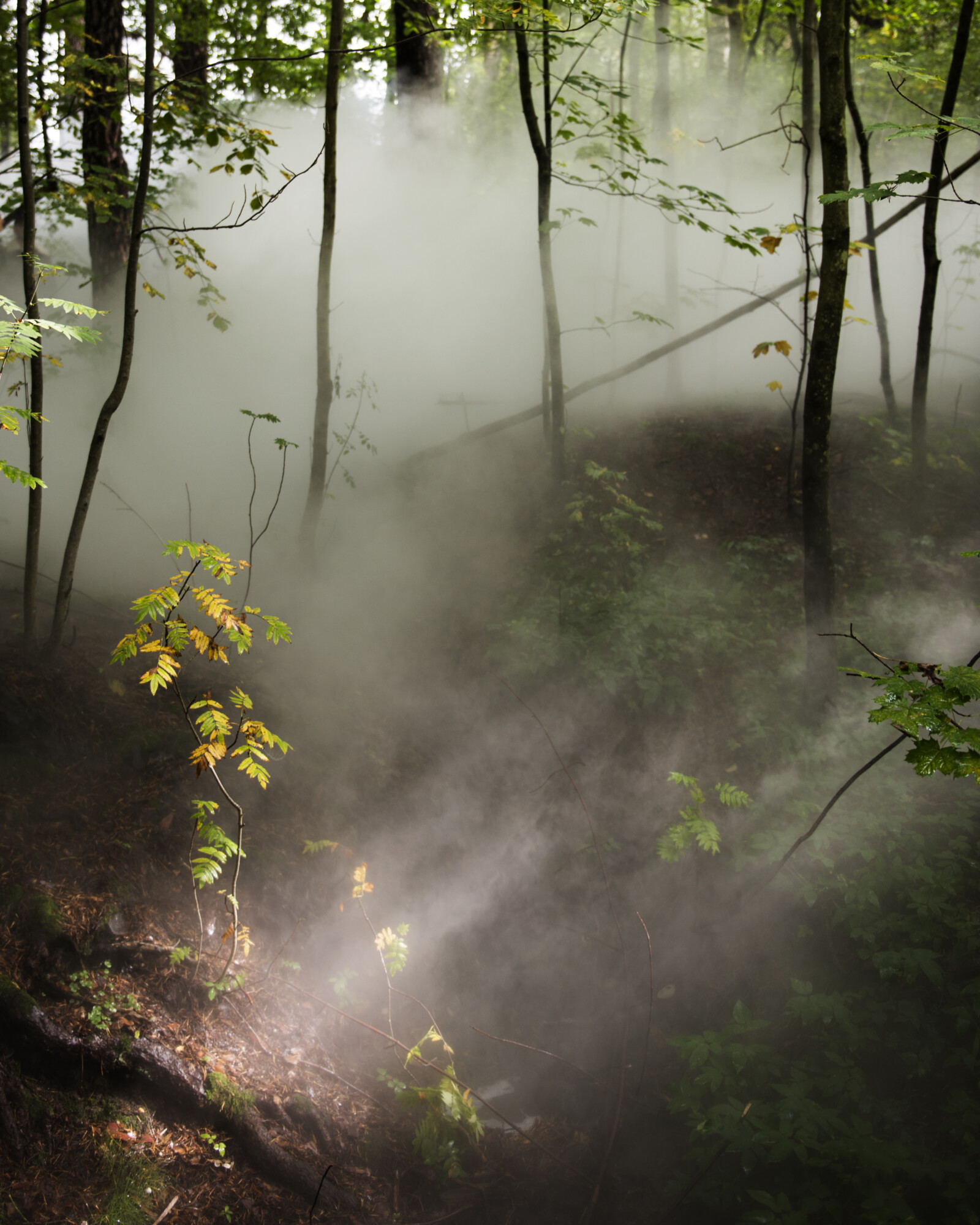
Located permanently in Oslo’s Ekebergparken, it uses microscopic water droplets to create a shifting mist that reacts naturally to the wind and local weather. The artwork's name references the meteorological code for the nearby Blindern weather station, emphasizing Nakaya's philosophy that the fog is a "negative sculpture" where the atmosphere is the mold and the wind acts as the carver.
Ekebergparken was full of surprises and happy coincidences — which is exactly why I was primed to believe what I saw was real. As I descended the path, fog began rising from the forest. It was surreal and felt entirely possible. I got goosebumps.
I was already deep in the feels, awed by the beauty of it, before I realized: it was a fog sculpture by Nakaya. It only appears for ten minutes every few hours.
I had arrived at the exact right moment — completely unaware, completely caught in wonder.
I'm not sure if the fog sculpture caused a sense of wonder in me because of the lack of visibility and mystery often felt when anyone experiences fog but it could have also been enhanced because I was in Norway. Scandinavian folk tales often treat the forest as a magical, liminal space filled with both wonder and peril. (fairytalez) Whatever it was, I giddily stopped in my tracks!
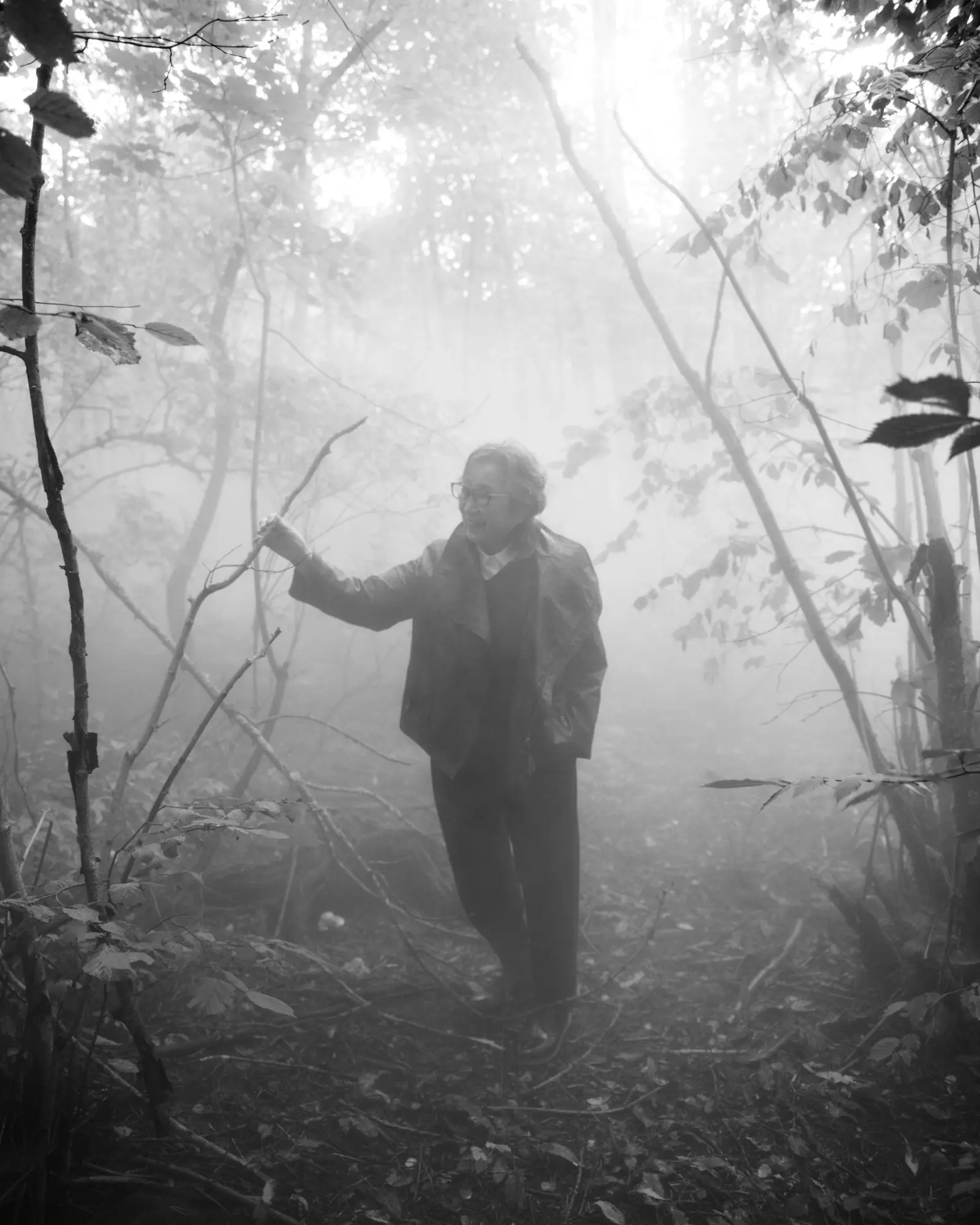
I want to provide a situation that people can physically relate to nature. For me, nature is not an object of beauty, but the beauty is in the relationship a person develop with nature. - Fujiko Nakaya
This piece, then, is not just art. She is creating an experience for viewers to have with nature. It reminds me of how I love storms and the excitement and mystery of weather. When I was a kid, my dad and I would watch thunderstorms raging through our neighborhood from the doorway in awe. Likely because of what scientists call "chrysalis"—a primal craving for an adrenaline rush safely contained within a boundary. Humans are naturally thrilled by danger and untamed power, but we only truly enjoy it when we are in a position where we can observe the spectacle without being in actual peril. The "Sublime": In psychology and art, the sublime is an aesthetic experience of awe mixed with a touch of terror. Severe weather and fog that blinds you, provide an intense, visual reminder of nature’s sheer power and how small we are in the grand scheme of things. (The Independent)
What ever the reason, I really loved this piece. Lets think about how nature can help you to experience a sense of wonder.
Say
Stepping outside and really looking does something measurable to us. Research shows that experiencing awe in nature lowers stress hormones, quiets the inner critic, and reminds us we're part of something beautifully bigger than our to-do lists. Wonder isn't just a feeling. It's a reset.
Take a solo walk in nature, sit a while and soak it in!
Watch a storm from a safe place. Stop on the side of the road in the fog and let it wash over your car.
Loving the Weekly Wonder?
Please forward it to a friend, or buy me a coffee to say thanks! Oatmilk flat white :)
About the Artist: Fujiko Nakaya
(中谷 芙二子, Nakaya Fujiko; born 15 May 1933) is a Japanese artist, a member of Experiments in Art and Technology, and a promoter, supporter, and practitioner of Japanese video art. She is best known for her fog sculptures.
Japanese artist Fujiko Nakaya is the daughter of the physicist and science essayist Ukichiro Nakaya, renowned for his work in glaciology and snow crystal photography. Like her father, Ms. Nakaya’s lifelong artistic investigation engages the element of water and instills a sense of wonder in everyday weather phenomena. Working as part of the legendary group Experiments in Art and Technology (E.A.T.), she enshrouded the Pepsi Pavilion at the 1970 World Exposition in Osaka in vaporous fog, becoming the first artist to create a sculptural fog environment.
Since that first project, Nakaya has created fog gardens, falls, and geysers all over the world. You can experience her permanent fog landscapes at the Nakaya Ukichoro Museum of Snow and Ice in Ishikawa, Japan; the Australian National Gallery in Canberra; and the Jardin de L'Eau, in the Parc de la Villette, Paris. She recently created a fog sculpture for the Guggenheim Museum in Bilbao and consulted with architects Diller Scofidio + Renfro on the Blur Building for the Swiss Expo in 2002 on Lake Neuchatel. Nakaya has also collaborated with artists Trisha Brown, David Tudor, and Bill Viola to develop fog performances and stage sets.
Nakaya collaborated with Thomas Mee, a Los Angeles-based engineer, in the development of her first fog installation in 1970. Mee had originally developed techniques for generating chemical-based artificial fog to protect orchards from frost. Through their collaboration and perseverance, Mee figured out a system for generating water-based artificial fog. The company he founded, Mee Industries, is now operated by his children. Nakaya has been collaborating with Mee for the last forty years.
Although Nakaya’s fog environments have been presented around the world, this is her first project in the San Francisco Bay Area, a region famous for its dramatic fog. With the seventy-fifth anniversary of the Golden Gate Bridge, the completion of the new eastern span of the San Francisco-Oakland Bay Bridge, the America’s Cup, and the reopening of the Exploratorium on the San Francisco waterfront, 2013 was viewed in San Francisco as the Year of the Bay. Amid all of the water-related activity, Nakaya’s project heightened public awareness of San Francisco’s dynamic weather and bay ecology for an international public. Fog Bridge is now a permanent installation at the Exploratorium.
The first comprehensive monograph of Nakaya's work, presenting more than fifty fog works created for public spaces around the world, as well as video and painting works, was recently published along with a DVD by Anarchive, France.
This summer, I’m trying something a little different.Every week, I’ll share one artwork by one artist that has stayed with me. Sometimes it made me laugh or feel something indescribable. Sometimes it challenged what I believed. Sometimes I simply couldn’t stop thinking about it. These aren’t necessarily the “greatest” works of art. They’re the ones that sparked wonder for me. I hope these stories help you discover a few artworks that stay with you, too. Do you have Pareidolia? "Canface" by...
This summer, I’m trying something a little different.Every week, I’ll share one artwork by one artist that has stayed with me. Sometimes it made me laugh or feel something indescribable. Sometimes it challenged what I believed. Sometimes I simply couldn’t stop thinking about it. These aren’t necessarily the “greatest” works of art. They’re the ones that sparked wonder for me. I hope these stories help you discover a few artworks that stay with you, too. Kimiko Nishimori “I just want to do...
This summer, I’m trying something a little different.Every week, I’ll share one artwork by one artist that has stayed with me. Sometimes it made me laugh or feel something indescribable. Sometimes it challenged what I believed. Sometimes I simply couldn’t stop thinking about it. These aren’t necessarily the “greatest” works of art. They’re the ones that sparked wonder for me. I hope these stories help you discover a few artworks that stay with you, too. See Nimbus Palácio de Estoi, 2026,...